

Why Clients Choose Custom Wall Finishes After Wallpaper
Many homeowners start with wallpaper—but later switch to custom wall finishes. Here’s why the difference matters in design, texture, and long-term results.
CONTROVERSIAL TOPICS
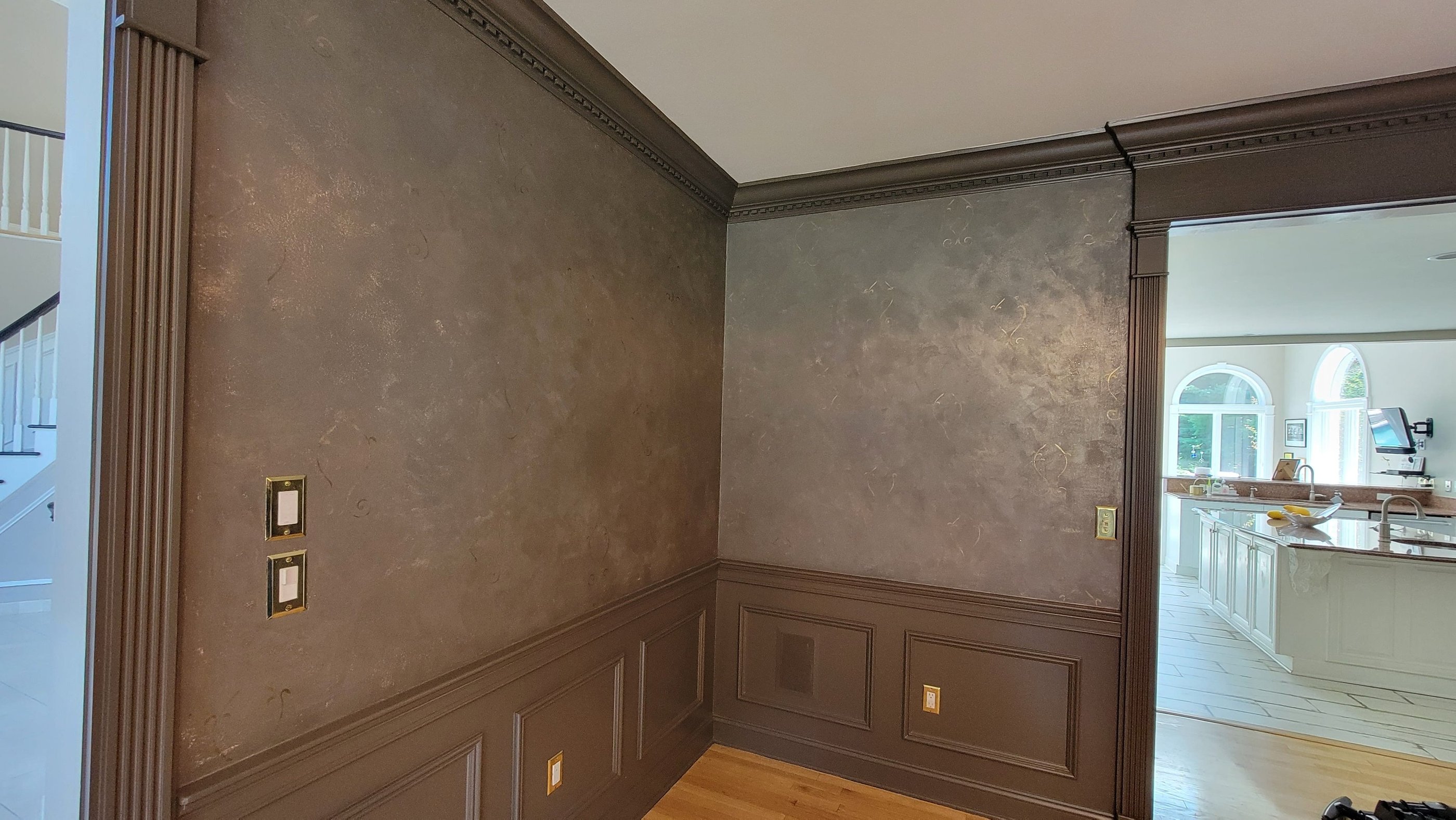
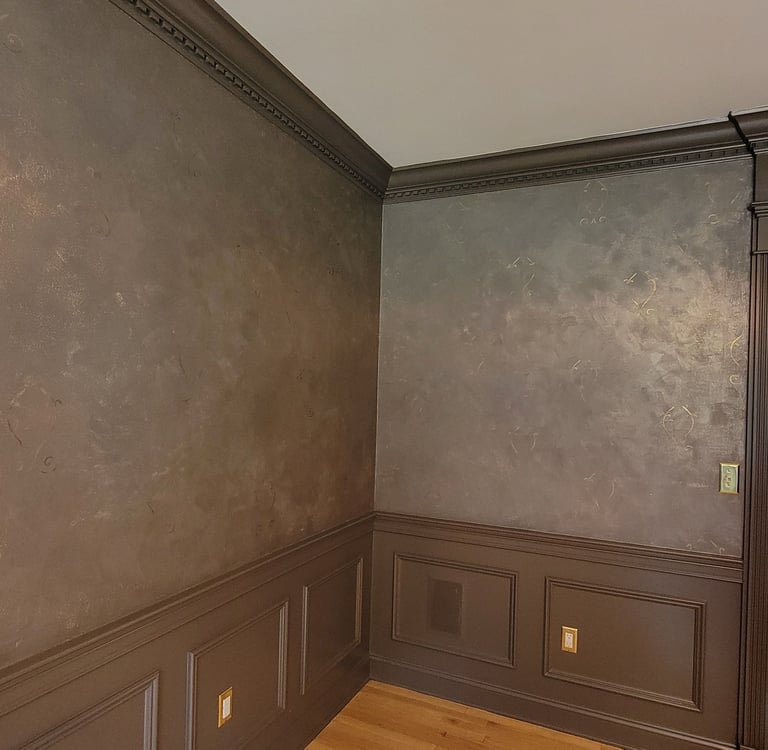
Many of my clients come to me after having wallpaper in their homes.
Not because they didn’t like it at first—
but because of what happened over time.
And that experience usually changes how they think about their walls entirely.
Wallpaper is selected. A wall finish is created.
Wallpaper is chosen from what already exists.
You flip through a book, find a pattern, and apply it to the wall.
It’s efficient. Predictable. Immediate.
A custom wall finish works differently.
It isn’t selected from a page.
It’s created directly on the wall—layer by layer—based on the space itself.
The color, the movement, the texture…
all of it develops in response to the room.
No two walls are ever exactly the same.
The difference shows up in the feeling of the room
Wallpaper can absolutely be beautiful.
But it will always read as something applied onto the wall.
A hand-applied finish becomes part of the wall.
It reacts to the light.
It has depth.
It feels integrated rather than placed.
That difference is subtle—but once you see it, it’s hard to unsee.
Why imitation only goes so far
There’s a reason you’re starting to see wallpaper that mimics plaster, limewash, or textured finishes.
The industry is trying to recreate the look of hand-applied work.
And visually, from a distance, it can come close.
But a printed pattern—even a very good one—will always sit flat on the wall.
A hand-applied finish has movement.
It has variation.
It responds to light and shifts throughout the day.
You can print the look…
but you can’t print the depth.
What many homeowners don’t realize until later
Many of my clients once had wallpaper.
They loved it—at first.
But over time, styles change. Spaces evolve. And that’s when the challenge begins.
Removing wallpaper isn’t always simple.
It can be time-consuming, messy, and sometimes damaging to the wall underneath.
By the time it’s fully removed and repaired, the process often becomes far more involved than expected.
That experience is what leads many homeowners to look for a different approach the next time around.
A custom wall finish becomes part of the wall itself—
which means it can be refreshed or adapted over time without starting from scratch.
For many of my clients, it’s less about replacing wallpaper…
and more about choosing something they won’t have to undo later.
It’s not about what’s better. It’s about what you value.
If you’re looking for something quick, pattern-driven, and easy to install,
wallpaper may be the right fit.
But if you want something more intentional—
something developed specifically for your space,
something with depth, movement, and individuality—
that’s where a custom wall finish comes in.
A different kind of decision
Most of the clients I work with aren’t just trying to fill a wall.
They’re trying to create a space that feels a certain way.
And that requires a different approach.
Not faster. Not off-the-shelf.
But thoughtful, collaborative, and tailored.
If you’re deciding between the two
You don’t have to have all the answers upfront.
Sometimes it starts with a conversation about the space, the light, and how you want the room to feel when you walk in.
👉 https://www.artworksbymarcine.com/decorative-wall-finishes





Copyright © Artworks by Marcine, 2025.