

A Room Can Look Expensive and Still Feel Disconnected
A room can contain beautiful furniture, custom finishes, statement lighting, and artwork, yet still feel visually disconnected. This post explores why cohesion has less to do with expensive pieces and more to do with balance, restraint, and understanding what deserves to lead within a space.
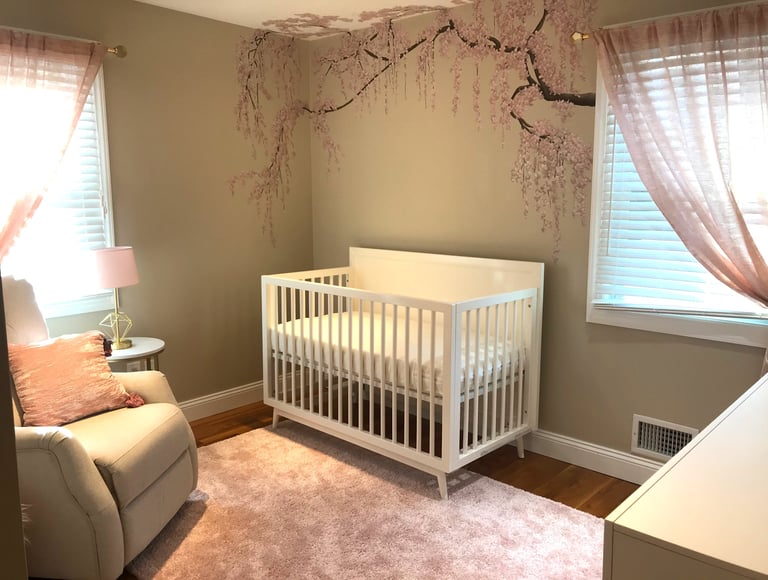
Most people assume that if a room contains beautiful things, the room itself will automatically feel beautiful. But that’s not always what happens.
A space can have custom furniture, statement lighting, layered textures, artwork, expensive materials, and carefully chosen finishes, yet still feel unsettled somehow. Not necessarily bad. Just disconnected. Like everything in the room is asking for attention at the same time.
That’s usually where the problem starts.
Beautiful Pieces Can Still Compete With Each Other
One of the more subtle challenges in interior design is understanding that visual quality alone doesn’t automatically create cohesion.
A room can contain beautiful materials, custom elements, and high-end finishes, yet still feel visually noisy if there’s no hierarchy guiding the experience of the space. When every piece is trying to lead, nothing actually settles.
You can feel it immediately when you walk into a room like that. Your eye keeps moving, but it never really lands anywhere.
Good Design Knows What Deserves to Lead
Good design isn’t about beautiful pieces. It’s about knowing what deserves to lead and what should support it.
Sometimes the architecture should be the focal point. Sometimes it’s the artwork. Sometimes it’s the light fixture, the texture on the wall, or even the negative space around everything else.
The rooms that feel the most elevated usually aren’t the ones trying to impress you from every angle. They’re the ones where each element understands its role within the larger space.
That’s where restraint becomes important.
Not Every Element Needs to Dominate
This is something that often comes up with both murals and decorative wall finishes.
People sometimes assume that every custom element should become the center of attention, but that’s not always what creates the strongest result. A wall finish, for example, can quietly support the architecture of a room instead of competing with it. It can soften transitions, add movement, create atmosphere, and allow other elements in the space to breathe.
The same is true with murals. A mural should feel connected to the room it lives in, not visually disconnected from everything around it. Even bold artwork still needs balance.
That’s part of what makes a space feel intentional instead of overwhelming.
Calm Spaces Usually Feel Intentional
Interestingly, the rooms that feel the most sophisticated are often the ones exercising the most restraint.
Not because they have less personality, but because there’s clarity in the decisions behind them. There’s a sense that someone understood what mattered most and allowed the rest of the room to support it quietly.
That’s usually what people are responding to when they describe a space as feeling calm, cohesive, or elevated. Not just the quality of the individual pieces, but the relationship between them.
A room can absolutely look expensive and still feel disconnected.
The difference usually comes down to whether the space was designed around attention… or around balance.





Copyright © Artworks by Marcine, 2025.